 Why do some houses sell for less than their Zillow estimate? Do you think your house will sell for more than the online estimates? In our area, many of you, whether selling or buying, are a bit vexed when they search online. This may lead you to “Enter Your Address and Find Your Home Value,” which just triggers many, many phone calls from real estate agents.
Here’s how it works:
1. You enter you address and email, sometimes phone number is optional.
2. Your personal information is then sent to dozens of local real estate agents.
3. You will receive multiple calls, text messages, and emails.
Your private information, including your street address, and your intent to sell is telegraphed to random real estate agents who will do anything, including drive to your house, for your business.
Why risk your privacy just to obtain a value on your house? We know that pricing a house is both an art and a science. The online estimates on Zillow, Redfin, Realtor.com, etc. are based on complex algorithms that mainly assess on square footage and do not “sort” for types of properties such as condominiums or single family homes, for example.
What should you do if you can’t trust the internet? Stay calm and contact us! Consult with Carolyn and she will prepare a personalized home value estimate based on similar recently sold properties, similar under contract properties, and similar properties for sale. If you prefer to start online, you can fill out OUR form for your free home valuation – this information is ONLY sent to Carolyn, no other agents.
 Paint can transform a space, but flooring is a key design element that is just as visually impactful. The flooring you choose can set the stage for your space, making it feel modern, cozy, or rustic – whatever look you are going for. There are many components to consider when choosing the type flooring, from aesthetics to price, durability, and upkeep. So how do you choose?
 Sometimes even real estate professionals need help organizing. When I decided to refresh my bedroom space the first thing I did was call Jennie for her expertise. Jennie has helped many of our clients reset and reconfigure their living spaces. Because my attempts to reorganize and reconfigure my bedroom continue to frustrate me, I hired Jennie myself to solve my organizational issues.
 If you want to get the highest price for your house when it’s time to sell, then you need a professional to assess your property’s condition. Buyers scrutinize your house and property from top to bottom. One question that sellers often ask is, “Should I paint?” And, as you can imagine, the answer is specific to each situation. There is one painting job that you should book right away, however.
 In the wake of the historic flooding that resulted in Vermont being declared a Federal Disaster Area many homeowners and buyers have been asking, “Is my house at risk of flooding?” There is no definitive answer to this question, however we have some resources available to help assess risk levels. Remember, though, water takes its own “path” and what may “not” be in a flood zone or high risk area right now could turn into one very quickly depending on the circumstances.
 It’s turning into a cruel summer for many buyers and sellers. Sellers and buyers are increasingly afraid that their house sale or purchase may be their next mistake.
 To be perfectly honest, we do not see many houses with wallpaper. In the 1970s wallpaper donned many kitchens, bedrooms, and living rooms. In the 1990s wallpaper borders were popular in living rooms, bathrooms, and kitchens. Today, however, with the influence of HGTV and other media, neutral pallets dominate the general decorating “vibe.”
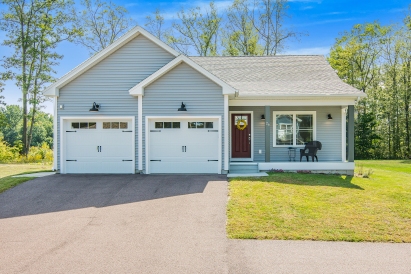 Maybe you “shouldn’t judge a book by it’s cover,” but, in the real estate arena Buyers do judge houses from their exteriors. Serious buyers will spend several minutes looking at the outside of your house before they even step inside. Many of us focus on the interior of the house when getting prepared to sell. This makes sense, of course, since buyers focus on interior photos when deciding whether to consider or eliminate a property. Once they make the trip to the house, however, it’s the outside that makes the first impression. Here are our top tips for elevating your exterior to impress buyers:
 Before we delve into this month’s blog, “What is the Best Home Estimate Tool?” we want to give a disclaimer – on the Weaver Team we are real estate geeks. We spend hours studying the real estate market. Just ask us a simple question and we’ll go on and on about absorption rate, days on market, list to sale price ratios, and more. So, if you ask us, “What is the Best Home Estimate Tool?” we do have a short answer, “The Weaver Team!”
 We do sell houses year-round in Northwest Vermont. Who are these buyers and sellers? Why can’t they wait until the “spring market” when the grass is green and the ice has melted from driveways?
