 If you’re a fan of Zillow.com then you are familiar with the “Zestimate” value of your house. Of course, it is an “estimate of value” but because it is generated by Zillow they have added the “Z” to make it proprietary. Recently a buyer asked why a Zestimate was so much lower than the asking price for a house. Good question. Let’s discuss.
Have you checked your house on Zillow lately? If you have, then you may be wondering how Zillow came up with that value. As a real estate agent and as a member of the National Assocation of Realtors, Vermont Association of Realtors, and the Northwestern Vermont Board of Realtors, I have access to many estimating programs that use data differently than Zillow. In addition, I have access to hyper-local real estate information that is reported monthly.
If you are looking for a true “range of value” for your house, then I need to visit. There are many factors involved in pricing a property and the online resources give us a guide, but do not use data points that are crucial in our local area.
Back to the original question, “Why is the Zestimate so much lower than the asking price of the house?” The answer is, “Because Zillow has never been to the house, has never seen the house, and, relies on data that may or may not be accurate.”
For more information on your house, and, to see if your value has truly increased or decreased, get in touch with us.


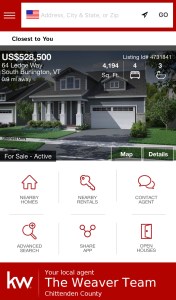 Frustrated with your home search? Can’t find what you are looking for? Maybe your dream house doesn’t exist, can’t be built, or will never “pop up” on your Zillow alerts. Depressing, right? How did this happen? Why can’t you find the perfect house?
 The days are longer, the sun shines brighter, and, oh, those windows have a dirty film on them! Everyone sweeps floors, dusts baseboards, and neatens up at this time of year, but, how many of us remember to maintain and clean windows, screens, duct work, light fixtures, chandeliers, and bathroom fans?
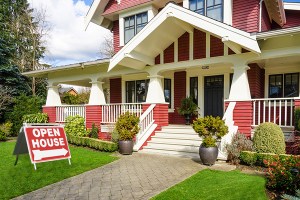
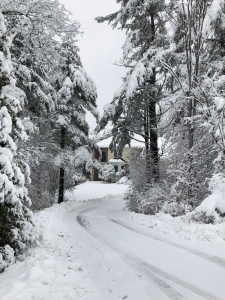 “Do people buy houses in the winter?” is a question that I often hear since winters in Vermont bring snow, sleet, ice and wind. Well, yes, people buy houses, however there are at least 4 challenges in the winter months:
 The home you are looking for may never show up on a public website like Realtor.com, Zillow.com, or your favorite real estate site. Over the last several years the public has increasingly become annoyed with searching for houses online. To really “find” your dream home you may need to “phone a friend.”
 On the Weaver Team, we love to write our own blogs on real estate topics. While we often impart our real estate opinions, knowledge, and advice, we decided that this month our blog is all about you. These are the three things we learned this year from our dear Real Estate Clients:
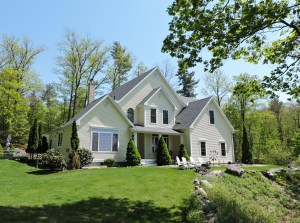 Welcome to Daylight Savings 2018 where we “fall back” an hour on November 4 and await March 11, 2019 when we adjust our clocks again to “spring forward.” Until the Winter Solstice, December 21st losing a minute or so of daylight every day. By the end of November, the sun will set around 4:15pm in Vermont.
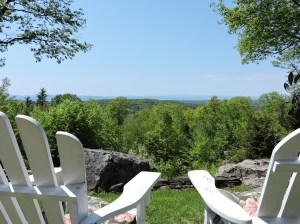 Location, Neighbors and Views – You will want to be able to see the boundaries, tree lines, fences, etc. when you visit the house. In the dark you won’t be able to discern any of this. Also, you will want to see check out the view from all of the windows. Just “driving by” doesn’t give you a good sense of what you will see when you look out the windows onto the side yard or back yard. One buyer drove by a house, fell in love, then when finally able to get inside the house and look out the back window she realized that she was staring at a neighborhood playground that wasn’t visible from the street.
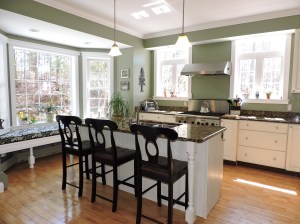 Natural Light – Yes, you have a compass app but it is still no substitute for being inside the house to experience natural sunlight. How dark is the house, really, during the day? Is there enough natural light? You will only know if you view the property in the daytime hours.

